A maintenance checklist for older homes operates as a structural preservation layer within a broader household maintenance system, designed to manage progressive material degradation, redistribute accumulated load, and maintain operational stability across extended time horizons. Unlike conventional maintenance models, older homes require a differentiated framework due to cumulative wear, layered modifications, and reduced tolerance to delayed intervention.
Within a system architecture, aging structures function closer to their operational thresholds. Minor inefficiencies that would remain negligible in newer systems tend to amplify over time, increasing friction, accelerating degradation, and reducing system responsiveness. Preventive maintenance in this context must therefore operate as a continuous regulation model rather than a reactive correction mechanism.
When this layer is absent or inconsistently applied, localized failures emerge and are often interpreted as isolated issues. Structurally, they represent systemic drift. A properly defined checklist enables early detection, controlled intervention, and sustained alignment with system capacity.
Maintenance Checklist for Older Homes (Applied Structural Model)
A maintenance checklist for older homes should be understood as an applied structural model composed of interdependent maintenance layers, reflecting principles described in systems theory. Rather than relying on fixed procedural sequences, the model operates through overlapping control zones that collectively preserve system integrity.
These zones include:
- Integrity verification
- Environmental stabilization
- Load redistribution
- Friction management
- Progressive recalibration
Each component addresses a specific dimension of structural preservation while maintaining continuity with the broader maintenance architecture.
Structural Characteristics of Aging Systems
Older homes exhibit systemic characteristics that alter maintenance behavior and require structural adaptation.
Key structural conditions:
- Material fatigue resulting from prolonged exposure
- Incremental modifications across different time periods
- Variability in construction standards
- Reduced tolerance to environmental fluctuation
These conditions create nonlinear degradation patterns. Structural stress does not progress evenly; it accumulates in localized zones and often remains undetected until thresholds are exceeded.
Integrity Verification Layer
The integrity verification layer focuses on identifying early-stage degradation before it transitions into structural instability.
Primary inspection domains:
- Foundation and load-bearing supports
- Roofing systems and structural interfaces
- Wall integrity and surface continuity
Observational indicators:
- Micro-fractures and material separation
- Irregular deformation patterns
- Persistent moisture traces
This layer establishes a baseline condition for targeted intervention, preventing small inconsistencies from evolving into systemic failure.
Environmental Stabilization Layer
Environmental variables exert amplified impact on older structures due to reduced insulation efficiency and material resilience.
Structural priorities include:
- Controlling moisture infiltration pathways
- Stabilizing temperature variation across zones
- Maintaining airflow consistency
Applied actions:
- Seal transitional interfaces and entry points
- Restore ventilation pathways
- Address condensation-prone zones
Environmental stabilization becomes especially critical during seasonal transitions, as outlined in a spring home maintenance checklist, where inspection and adjustment cycles help mitigate environmental stress on aging structures.
Load Redistribution Model
Load distribution in older homes often becomes uneven due to evolving usage patterns and structural modifications over time.
This requires active intervention:
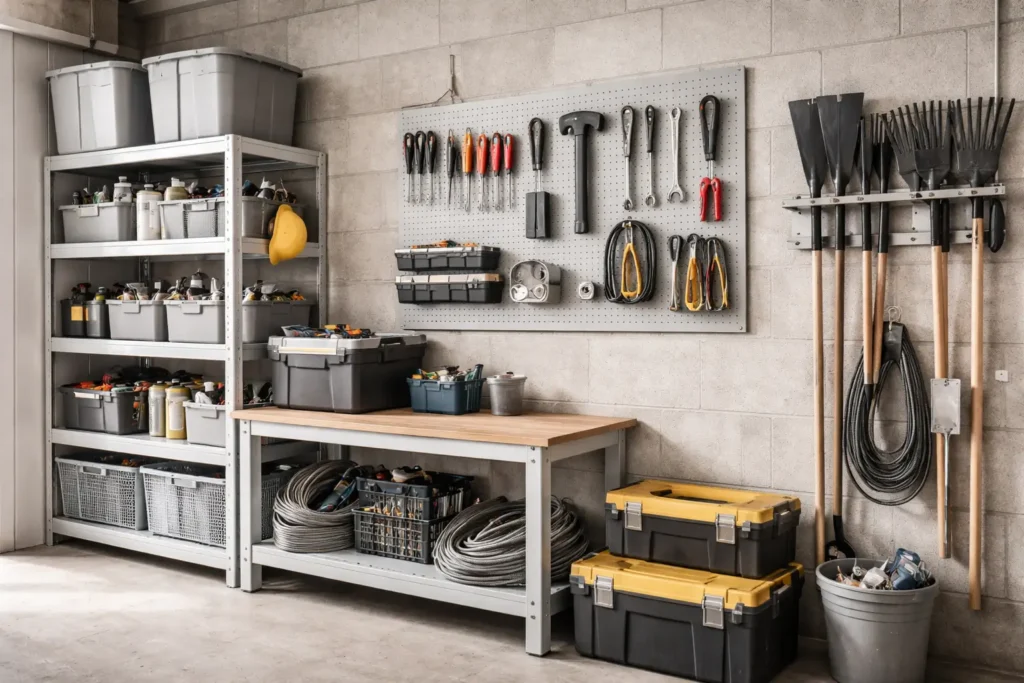
- Reorganizing storage to prevent localized stress
- Redistributing weight across structural supports
- Relocating high-load elements from vulnerable zones
Redistribution is not corrective; it is preventive, aligning with a capacity based home maintenance model that prevents localized overload and preserves structural balance. It reduces pressure concentration and extends the functional lifespan of structural components.
Friction Accumulation and System Resistance
Friction in older homes is rarely mechanical in isolation. It emerges from interaction inefficiencies between system components.
Common friction sources:
- Misalignment from incremental structural changes
- Obstructed airflow or water pathways
- Redundant or obsolete system elements
Structural mitigation strategies:
- Simplify system pathways
- Remove non-functional components
- Align interacting elements to reduce resistance
Reducing friction improves system responsiveness and minimizes stress accumulation.
Drift Detection and Progressive Adjustment
Drift in aging systems develops gradually and often remains undetected until it disrupts operational stability.
Indicators of structural drift:
- Increasing maintenance frequency in specific zones
- Recurrent minor failures
- Declining system responsiveness
Adjustment mechanisms:
- Reinforce structurally weakened areas
- Modify maintenance intervals based on observed patterns
- Redistribute load across system components
Early intervention prevents drift from becoming embedded in system behavior.
Applied Execution Model (Layer-Based)
The execution of a maintenance checklist for older homes must remain flexible while preserving structural coherence. This becomes especially relevant in constrained environments, as explored in home maintenance for busy professionals, where structural efficiency must compensate for limited execution capacity.
Stabilization Layer
- Remove accumulated debris and inactive materials
- Clear access to inspection zones
- Reestablish baseline system conditions
Verification Layer
- Conduct targeted inspection of high-risk components
- Identify early-stage degradation
- Validate material integrity
Adjustment Layer
- Apply localized reinforcement
- Redistribute structural load
- Optimize system pathways
These layers operate concurrently, allowing adaptation without compromising structural continuity.
System Redundancy and Risk Containment
Older homes benefit from incorporating redundancy into maintenance strategy. Redundancy reduces dependency on single points of failure and increases system resilience.
Structural applications:
- Backup pathways for water and airflow
- Alternative load distribution zones
- Reinforcement of critical structural points
Redundancy does not increase complexity when applied strategically. It stabilizes system behavior under variable conditions.
Integration With Multi-Layer Maintenance Systems
Preventive maintenance for older homes must integrate with broader maintenance layers to ensure system continuity.
- Continuous maintenance cycles → maintain baseline stability through low-intensity distributed adjustments
- Monthly cycles → regulate short-term accumulation through a structured monthly home maintenance checklist
- Seasonal adjustments → manage environmental transitions
- Annual recalibration → restore structural alignment
The preventive layer ensures these systems remain synchronized, preventing operational gaps and load concentration.
Maintenance Checklist for Older Homes (Structured Reference)
The following reference consolidates the applied structural model into a usable format:
- Inspect foundation and structural supports
- Evaluate roofing systems and load-bearing elements
- Seal moisture entry points and stabilize environmental exposure
- Reorganize storage to redistribute structural load
- Remove redundant or obsolete system components
- Reinforce areas showing early-stage degradation
- Verify airflow and drainage pathways
This checklist functions as a structural reference rather than a rigid procedural sequence.
Long-Term Structural Sustainability in Older Homes
The maintenance model for older homes is defined by its capacity to absorb variability without structural failure. By integrating verification, redistribution, stabilization, and recalibration into a continuous system, it preserves operational integrity across extended timelines.
Rather than focusing on isolated corrective actions, the system evolves through controlled adjustment. Each intervention contributes to maintaining equilibrium, reducing reliance on reactive maintenance and supporting long-term structural resilience.
Over time, this model transforms aging from a source of instability into a managed process governed by predictable system behavior. Structural sustainability emerges not from repair frequency, but from consistent alignment between load, capacity, and environmental conditions.