
A capacity based home maintenance system does not fail due to insufficient effort, but due to structural imbalance between demand and processing capability. In most environments, this imbalance develops gradually, as incoming maintenance load continues to accumulate while execution capacity remains constrained or inconsistently applied. The resulting tension is not immediately visible, but it progressively reduces the system’s ability to absorb variation.
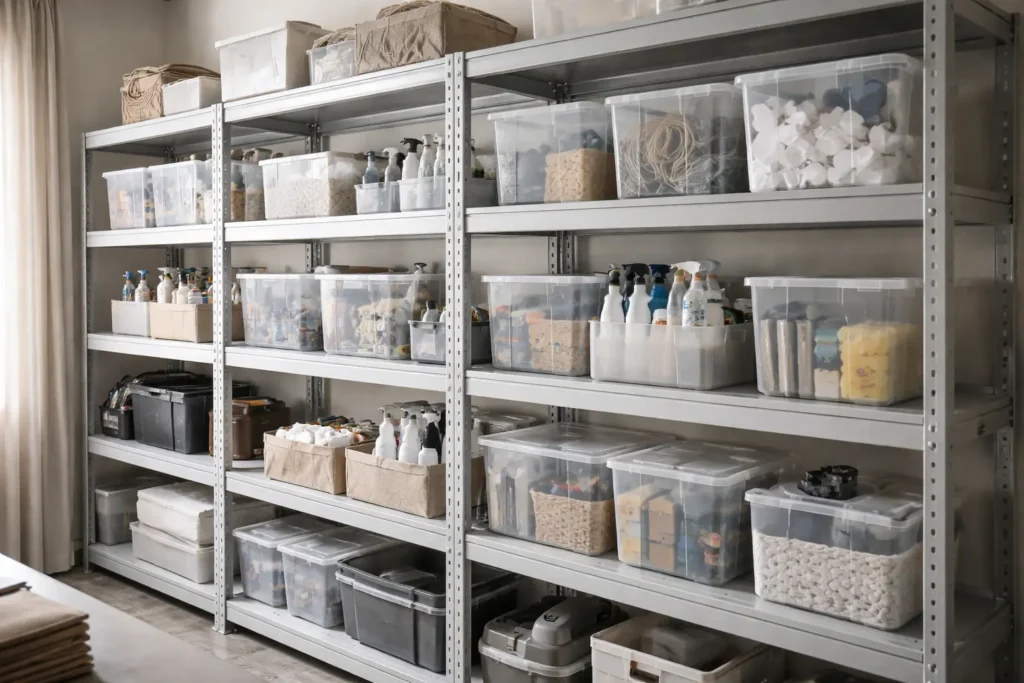
This condition emerges when maintenance is structured independently of capacity. Tasks are introduced based on perceived necessity, routine expectations, or reactive triggers, without regard for the system’s ability to process them within stable limits. Over time, this creates accumulation zones where demand exceeds sustainable execution, leading to load concentration and eventual threshold breaches.
A capacity based home maintenance model restructures this dynamic. Instead of organizing maintenance around tasks, it organizes the system around capacity constraints. The objective is not to increase output, but to maintain equilibrium between what enters the system and what can be consistently processed.
Structural Imbalance and Load Saturation Dynamics
Household systems rarely collapse due to isolated failures. Instability is typically the result of sustained imbalance, a pattern consistent with principles described in systems theory. This imbalance produces saturation points, where tasks begin to cluster and exceed localized processing limits.
Load saturation is not defined by absolute volume, but by relative pressure on the system. A moderate workload can generate instability if it is unevenly distributed or processed within a constrained timeframe. Conversely, higher workloads can remain stable if they are aligned with system capacity and distributed effectively.
As saturation develops, the system compensates through delay, prioritization, or task consolidation. These responses do not resolve the imbalance. They redistribute it, often increasing pressure in other areas of the system. This leads to cyclical instability, where periods of apparent control are followed by renewed accumulation. This pattern often evolves into reactive maintenance behavior, as explained in how reactive cleaning creates more work over time, where instability increases corrective effort.
A capacity based home maintenance approach eliminates this pattern by aligning input with processing capability, reinforcing the distinction between cleaning and household maintenance as separate structural functions. It ensures that load remains within the system’s operational range, preventing saturation before it occurs.
Capacity as a Multi-Dimensional Constraint
Capacity within a household system cannot be reduced to a single variable. It is composed of interacting dimensions that collectively define the system’s processing limits:
- Time available for execution within defined intervals
- Physical effort required to perform tasks
- Cognitive load associated with decision-making and coordination
These dimensions do not operate independently. A reduction in one dimension reduces the effective capacity of the entire system. For example, increased cognitive load can reduce execution efficiency, even if time remains constant.
A structurally stable system accounts for these interactions. It does not assume consistent capacity across all conditions. Instead, it defines a baseline capacity that reflects typical operating conditions and incorporates a margin for variability.
This margin is essential. Systems designed at maximum capacity operate near their limits, increasing sensitivity to disruption. Systems designed below capacity maintain a buffer that absorbs fluctuations without compromising stability.
Capacity Based Home Maintenance and Load Distribution
Within a capacity based home maintenance model, distribution is the mechanism through which equilibrium is maintained. Load must be allocated across time and space in a way that reflects actual capacity constraints.
Temporal distribution ensures that tasks are spaced according to available execution windows, a principle that becomes practical when applied through a weekly home maintenance checklist that organizes maintenance across rooms and time blocks. Spatial distribution ensures that tasks are positioned within zones that minimize friction and support efficient execution.
This dual distribution prevents concentration. Instead of accumulating tasks into discrete intervals, the system disperses them into manageable segments. Each segment remains within the system’s capacity, allowing continuous processing without overload.
Effective distribution requires alignment between:
- Task frequency and accumulation rates
- Execution effort and available energy
- Spatial configuration and movement patterns
When these elements are aligned, the system transitions from reactive correction to continuous regulation.
Friction Accumulation and Capacity Degradation
Friction acts as a limiting factor within the system. It reduces effective capacity without altering task volume, creating a mismatch between perceived and actual processing capability.
Friction sources are embedded within structural design:
- Misaligned storage relative to usage zones
- Non-standardized task execution pathways
- Redundant steps that increase effort
- Inconsistent item placement requiring repeated decision-making
As friction increases, tasks require more effort to complete. This reduces execution frequency and increases the likelihood of delay. Over time, delayed tasks accumulate, contributing to load saturation.
Within a capacity based home maintenance framework, friction reduction is a primary strategy. By minimizing resistance, the system increases effective capacity without increasing external resources. This allows the system to maintain stability under consistent load conditions.
Threshold Theory and Capacity Regulation
Every system operates within a threshold that defines its tolerance for variation. This threshold is directly linked to capacity. As effective capacity decreases, the threshold narrows, reducing the system’s ability to absorb disruption.
Threshold breaches occur when accumulated load exceeds the system’s capacity to process it within a given interval. These breaches trigger corrective interventions, which are typically more intensive than the tasks they replace.
A capacity-based model prevents threshold breaches by maintaining load below critical levels. This requires continuous monitoring of accumulation patterns and adjustment of distribution strategies.
The objective is to maintain the system within its operational range. Variation is not eliminated, but controlled. By regulating the relationship between capacity and demand, the system preserves stability without requiring reactive intervention.
Drift Formation Under Capacity Constraints
Drift is the gradual deviation of the system from its intended state. In capacity-constrained environments, drift develops when minor inconsistencies are not corrected within the system’s tolerance range.
These inconsistencies may include:
- Slight delays in task execution
- Minor deviations in item placement
- Partial completion of processes
Individually, these deviations are negligible. Structurally, they accumulate, altering the system’s baseline condition.
Drift is not a result of failure. It is a consequence of insufficient capacity margin, often observed in environments where recurring accumulation persists despite repeated efforts.
Preventing drift requires maintaining a buffer within the system. This buffer ensures that small inconsistencies are corrected without exceeding capacity, preserving structural alignment over time.
Calibration and Dynamic Capacity Alignment
Capacity is not static. It fluctuates based on external conditions, internal states, and system design. Calibration ensures that the system adapts to these fluctuations without losing coherence.
Calibration involves adjusting:
- Task frequency based on observed accumulation
- Distribution patterns to reflect available capacity
- Structural elements to reduce friction and improve efficiency
This process is iterative. It relies on feedback rather than predefined schedules. A calibrated system maintains alignment between capacity and demand, preventing divergence.
Without calibration, even well-designed systems degrade. Accumulation patterns shift, capacity fluctuates, and misalignment develops. Calibration restores alignment, ensuring that the system remains within its operational range.
Calibration involves adjusting task frequency based on observed accumulation, often supported by a monthly home maintenance checklist that structures preventive inspection cycles.
Structural Layers of the Capacity-Based Model
The capacity based home maintenance system is composed of interconnected layers that regulate its behavior:
- Capacity layer: Defines processing limits and available resources
- Distribution layer: Allocates load across time and space
- Friction layer: Identifies and reduces resistance points
- Correction layer: Addresses deviations before they accumulate
These layers operate as an integrated structure, consistent with a broader household systems blueprint that formalizes how maintenance transitions from reactive correction to structural stability. Failure in one layer increases pressure on others, creating systemic imbalance.
When aligned, these layers maintain equilibrium. Load remains distributed, friction is controlled, and deviations are corrected within the system’s tolerance range.
Environmental Mapping and Capacity Integration
A system cannot function independently of its environment. Structural design must reflect actual usage patterns rather than intended ones.
Environmental mapping identifies:
- High-frequency interaction zones
- Recurring accumulation points
- Movement pathways
- Distribution of activity across space
This information informs system design, ensuring that tasks are positioned within zones that support efficient execution. Without this alignment, the system introduces friction and reduces effective capacity.
A capacity based home maintenance model integrates environment and structure. It aligns system design with observed behavior, reducing resistance and improving stability.
Managing Variability Within Capacity Limits
Variability is inherent in any system. It arises from changes in usage patterns, fluctuations in capacity, and external influences. Systems that attempt to eliminate variability become rigid and inefficient.
A capacity-based approach accommodates variability by maintaining a buffer within the system. This buffer absorbs fluctuations without requiring structural adjustment.
Managing variability requires:
- Flexible distribution strategies
- Reduced dependence on precise timing
- Systems that tolerate minor deviations
This approach preserves stability by preventing variability from exceeding capacity limits, a condition reinforced by maintaining a daily reset system that supports continuous low-load adjustment within capacity limits.
Analytical Synthesis of Capacity-Based Home Maintenance
Capacity based home maintenance redefines the role of maintenance within a household system. It positions capacity as the central organizing principle, aligning demand with processing capability to maintain structural equilibrium.
By integrating load distribution, friction control, threshold regulation, drift prevention, and calibration, the system maintains coherence under continuous use. It prevents accumulation patterns that lead to instability and ensures that variation remains within controllable limits.
Over time, systems structured around capacity demonstrate consistent behavior. Load remains balanced, capacity is preserved, and drift is contained within acceptable boundaries. This stability is not dependent on increased effort, but on the continuous alignment between system demand and processing capability.
In this framework, long-term system integrity emerges from structural coherence. The system sustains itself by regulating internal dynamics, maintaining equilibrium between input and capacity, and preserving stability without reliance on corrective overload.