Household system stability is not the absence of mess.
It is the presence of structural alignment.
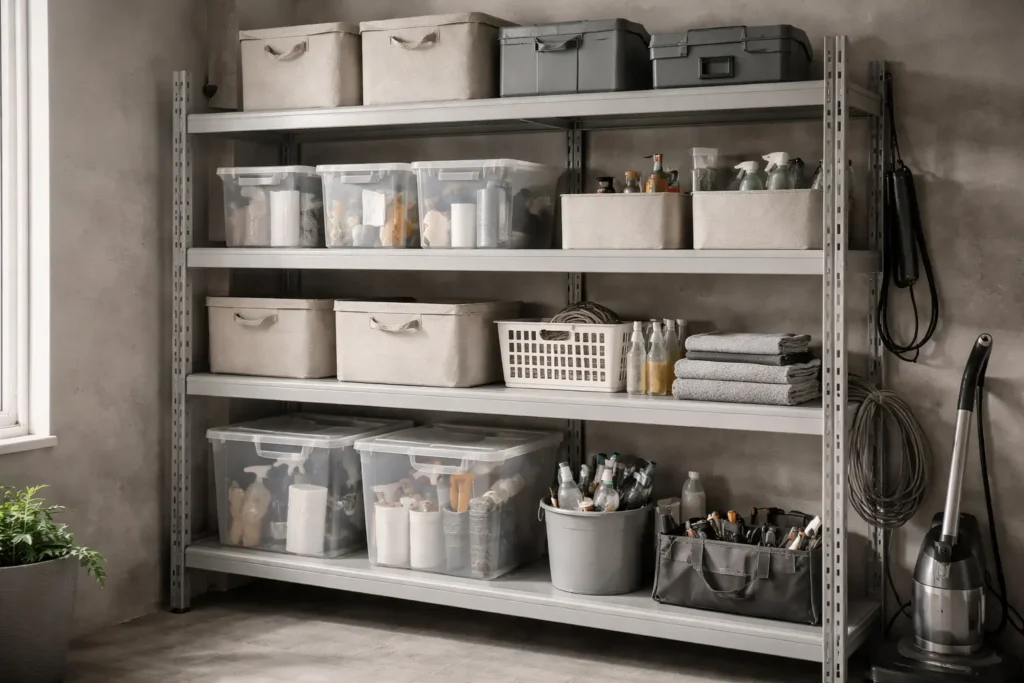
Many homes appear functional on the surface while operating below a critical stability threshold. Tasks are completed. Surfaces are reset. Weekly routines continue. Yet beneath this visible order, friction accumulates silently.
In household system stability, intensity is not the goal.
Equilibrium is.
Stability is not measured by appearance.
It is measured by resistance.
When resistance increases faster than corrective capacity, systems begin to drift. When drift continues without recalibration, collapse becomes inevitable.
Understanding household system stability requires examining the structural threshold at which sustainability shifts into instability.
What Is Household System Stability?
Household system stability refers to the structural integrity of a household system framework over time.
A stable system:
• Maintains baseline order with predictable effort
• Absorbs small disruptions without escalation
• Requires minimal corrective intervention
• Operates below cognitive overload
• Preserves functional continuity
Stability is not intensity.
It is equilibrium maintained across cycles.
In unstable systems, effort fluctuates dramatically. Work expands and contracts. Resets become necessary. Emotional resistance increases. Maintenance feels volatile rather than steady.
Stability produces neutrality.
When a system is stable, maintenance feels almost uneventful.
That neutrality is structural success.
The Stability Threshold: When Systems Begin to Drift
Every household system operates within a stability range.
Above the threshold:
• Tasks are manageable
• Friction remains low
• Execution is consistent
• Recovery from disruption is fast
Below the threshold:
• Backlog increases
• Sessions extend beyond intended duration
• Emotional activation rises
• Corrective intensity grows
The threshold is not a fixed point.
It shifts according to environmental demand, structural complexity, and household capacity.
Systems that do not recalibrate eventually operate below their stability range without immediate visibility.
Drift rarely announces itself.
It begins with micro-shifts:
• Slight task expansion
• Small delays
• Minor resistance
• Subtle inconsistency
These micro-shifts compound gradually.
Once compounding surpasses corrective capacity, the system crosses the stability threshold.
At that point, effort becomes reactive rather than preventive.
Friction Accumulation and Invisible Instability
Friction is the primary destabilizing force.
Friction is not clutter.
It is resistance to action.
Resistance may originate from:
• Excessive task scope
• Unrealistic frequency
• Cognitive overload
• Poor structural clarity
• Emotional fatigue
When friction accumulates invisibly, the system appears intact while slowly destabilizing.
This creates structural illusion.
The illusion persists because:
• Tasks are still completed
• Surfaces still appear clean
• Weekly cycles still function
However, the effort required to maintain these outcomes increases incrementally.
That increase signals instability.
Invisible instability often presents as:
• Maintenance taking longer than planned
• Increased procrastination
• Greater emotional negotiation
• Subtle avoidance patterns
These are not motivation failures.
They are threshold indicators.
Early Calibration Markers of Structural Risk
Household system stability can be monitored through calibration markers.
These markers reveal when a system approaches instability.
Key early indicators include:
Duration Expansion
Maintenance sessions gradually extend beyond intended time blocks.
Scope Inflation
Optional tasks become embedded as mandatory.
Recovery Delay
Disruptions require more time to correct.
Resistance Growth
Tasks feel heavier despite similar workload.
Frequency Distortion
Intervals either shorten under urgency or lengthen due to avoidance.
These markers appear before collapse.
Ignoring them accelerates drift.
Monitoring them protects stability.
Calibration is not reactive correction.
It is structural tuning.
When calibration is delayed, structural drift accelerates, often requiring deeper adjustments to restore alignment.
The Instability Zone and Structural Collapse
Once a system crosses its stability threshold, it enters the instability zone.
In this zone:
• Accumulation accelerates
• Emotional resistance spikes
• Sessions require higher activation
• Deep resets become frequent
The instability zone creates volatility.
Volatility produces burnout.
Burnout reduces consistency.
Reduced consistency deepens instability.
This becomes a self-reinforcing loop.
Eventually, one of two outcomes occurs:
- Full structural reset
- System abandonment
Both are signs that stability was not preserved earlier.
Collapse rarely reflects poor design alone.
In many cases, what appears to be failure is simply unaddressed instability that eventually forces full system resets.
It reflects unmonitored drift.
Load Distribution and Stability Preservation
Stable systems distribute load evenly.
Unstable systems concentrate load unpredictably.
Even load distribution includes:
• Small daily stabilizers
• Moderate weekly reinforcement
• Light periodic audits
Unstable load distribution includes:
• Heavy biweekly corrections
• Irregular deep cleaning
• Emergency sessions
Load concentration amplifies friction.
Friction accelerates threshold crossing.
Preserving household system stability requires keeping load below cumulative stress levels.
Frequency misalignment is one of the most common destabilizing factors in household maintenance systems.
Maintenance should feel proportional to environmental demand.
When effort feels disproportionate, stability is compromised.
The Role of Structural Simplicity
Complexity undermines stability.
As scope expands beyond original design, systems lose their structural balance and begin to accumulate invisible strain.
As systems evolve, additions accumulate:
• Extra steps
• Expanded checklists
• Increased frequency
• Additional expectations
Each addition increases structural weight.
Weight increases friction.
Friction lowers threshold tolerance.
Simplicity expands stability range.
A structurally simple system:
• Has clearly defined core tasks
• Limits optional expansion
• Protects minimum viable maintenance
• Avoids unnecessary aesthetic standards
Simplicity does not reduce effectiveness.
It increases resilience.
Capacity Alignment and Stability
Stability is relative to capacity. This relationship becomes clearer when examined through capacity-based home maintenance, where system stability depends on aligning workload with realistic processing capability.
Capacity fluctuates based on:
• Workload
• Health
• Seasonal changes
• Emotional demand
• Household size
A system calibrated for high capacity may destabilize during low-capacity periods.
Stable systems account for variation.
They include:
• A minimum layer that functions under strain
• Flexible frequency bands
• Scalable task intensity
Without capacity alignment, stability becomes fragile.
Systems that ignore energy constraints often transition from neutral maintenance into unsustainable effort cycles.
Fragile systems collapse under predictable life changes.
Robust systems absorb fluctuation.
Structural Neutrality as the Goal
The ultimate marker of household system stability is neutrality.
Neutrality means:
• Maintenance does not feel dramatic
• Effort does not spike unexpectedly
• Corrections remain minor
• Execution is predictable
Neutrality often goes unnoticed.
Dramatic resets feel productive.
Stability feels ordinary.
However, ordinary maintenance is structural success.
If effort frequently feels intense, stability is compromised.
Protecting Household System Stability Through Ongoing Calibration
Household system stability is not permanent.
It requires periodic calibration.
Calibration includes:
• Reviewing scope
• Reassessing frequency
• Monitoring friction
• Adjusting for capacity
• Removing structural excess
Calibration should occur before collapse.
Preventive tuning maintains threshold integrity.
Reactive correction restores but does not optimize.
Stable systems prioritize preventive alignment over reactive repair.
Long-Term Structural Consequences
Over months and years, stable systems produce:
• Lower cumulative effort
• Reduced emotional fatigue
• Fewer disruptive resets
• Extended material lifespan
• Predictable workload
Unstable systems produce:
• Volatility cycles
• Burnout
• Scope inflation
• Accelerated deterioration
• Increased repair frequency
The difference becomes measurable across time, not days.
Household system stability determines whether maintenance compounds positively or negatively.
Stability as Structural Intelligence
Household system stability is not achieved through increased effort.
It is achieved through structural calibration that keeps effort proportional to demand.
Stability emerges from:
• Structural simplicity
• Realistic frequency
• Balanced load distribution
• Capacity alignment
• Early calibration
Stability is preserved through attentiveness.
Collapse is rarely sudden.
It is gradual drift crossing an invisible threshold.
Recognizing that threshold transforms maintenance from reactive effort into structural intelligence.
Sustainable systems are not defined by intensity.
They are defined by alignment.
Alignment protects continuity.
And continuity sustains the home.