
Cleaning routines fail for structural reasons, not because of lack of effort. Many households rely on cleaning routines that appear effective at first. Lists are created, schedules are planned, and motivation feels high. Over time, however, these routines tend to break down.
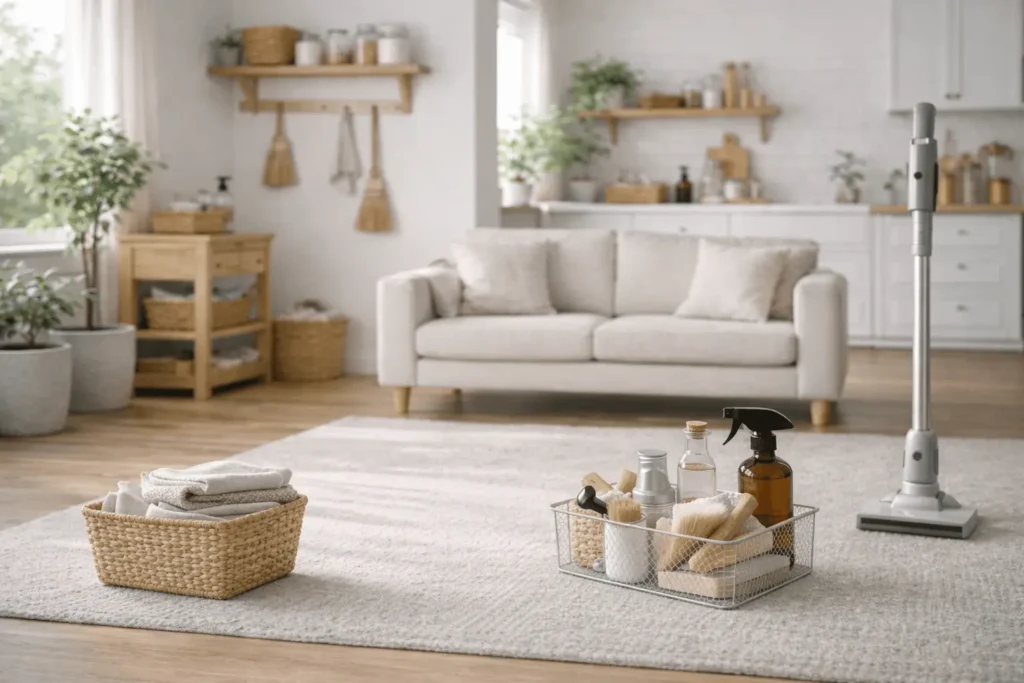
The problem is not lack of effort.
In most cases, routines fail because they are not supported by a clear system. A routine tells you what to do. A system defines how everything works together.
This article explains why cleaning routines collapse and how system-based approaches create more reliable, long-term household upkeep.
The Difference Between a Routine and a System
A routine is a repeated action.
A system is a structured framework that supports those actions.
Routines depend heavily on consistency, memory, and motivation. Systems depend on design. This distinction is critical. When a routine is missed, everything that follows often collapses. A system, on the other hand, absorbs small disruptions without failing entirely.
For example, if a weekly cleaning routine is skipped, visible clutter accumulates quickly. In a structured system, tasks are distributed across days and cycles, meaning one missed task does not create overwhelming consequences.
This difference explains why routines feel fragile while systems remain stable over time.
Why Motivation-Based Cleaning Rarely Lasts
Many cleaning routines are built around motivation. Tasks are grouped into specific days or moments when energy is expected to be high.
The issue is that motivation fluctuates.
Energy levels change, schedules shift, and unexpected demands appear. When a routine requires high motivation to function, it becomes unreliable.
A system reduces the need for motivation by distributing effort and lowering the intensity of individual tasks. Instead of relying on a “cleaning day,” systems spread responsibilities across predictable cycles. This lowers resistance and increases sustainability.
Consistency is not a result of discipline alone. It is the result of intelligent design.
Common Reasons Cleaning Routines Fail
Cleaning routines tend to fail for predictable structural reasons.
Overloaded Schedules
Too many tasks are assigned to a single day, making the routine difficult to maintain consistently. When one day becomes unrealistic, the entire routine is disrupted.
Rigid Structures
Routines that do not adapt to changing circumstances break easily when life becomes busy. Travel, illness, workload changes, or family demands can derail rigid systems.
Reactive Design
Many routines respond to visible mess rather than preventing buildup. This leads to repeated resets instead of steady maintenance.
Mental Fatigue
Constant decision-making about what to clean and when creates cognitive overload. Without predefined structure, cleaning becomes another source of stress.
Without a system to absorb these pressures, routines eventually become unsustainable.
The Hidden Cost of Reset Cleaning
One of the most common consequences of routine failure is “reset cleaning.” This occurs when a household alternates between periods of effort and periods of neglect.
Instead of steady upkeep, cleaning becomes cyclical and intense. Large cleaning sessions are followed by exhaustion, which then leads to avoidance. Over time, this cycle reinforces inconsistency.
A structured household cleaning system eliminates the need for repeated resets. Maintenance becomes incremental rather than dramatic.
This reduces physical effort and mental strain.
How Systems Create Stability Over Time
Systems work because they focus on structure rather than performance.
A household cleaning system defines:
• What must be maintained
• How often maintenance occurs
• How tasks are distributed across time
• What minimum standard is acceptable
Instead of relying on perfect execution, systems allow for flexibility. Missing a task does not collapse the entire structure because the system continues operating.
This built-in resilience is what allows systems to last. Stability emerges not from intensity, but from predictable patterns.
The Role of Preventive Maintenance
Cleaning routines often focus on visible results. Systems focus on prevention.
Preventive maintenance reduces accumulation before it becomes overwhelming. Small, consistent actions keep spaces functional without requiring intensive cleaning sessions.
For example:
• Wiping surfaces daily prevents deep buildup
• Rotating tasks weekly prevents overload
• Structured decluttering cycles prevent accumulation
Over time, preventive systems eliminate the need for frequent deep cleaning, replacing it with steady, manageable upkeep.
Why Consistency Comes From Design, Not Discipline
Many routines fail because they demand discipline rather than support.
Systems reduce the need for discipline by:
• Limiting daily workload
• Creating predictable patterns
• Removing unnecessary decisions
• Defining task boundaries
When tasks are easier to complete, consistency follows naturally. The system supports behavior instead of forcing it.
A well-designed cleaning system works in the background. It minimizes friction and reduces reliance on willpower.
Adapting When a Routine Stops Working
When a cleaning routine becomes difficult to maintain, the solution is rarely to try harder.
Instead, the structure should be examined:
• Are tasks evenly distributed?
• Is frequency realistic?
• Does the routine rely on high energy?
• Are responsibilities clearly defined?
Adjusting structure restores balance without increasing effort. Systems evolve, while rigid routines tend to fail.
Flexibility is not weakness. It is a sign of functional design.
From Short-Term Effort to Long-Term Structure
Cleaning routines often succeed in the short term because they rely on enthusiasm. Systems succeed in the long term because they rely on structure.
By shifting focus from routines to systems, households can maintain cleaner, more functional spaces without constant resets. The result is not perfection, but stability — a state where upkeep feels manageable rather than exhausting.
A cleaning system does not aim to eliminate effort. It aims to organize effort in a way that is sustainable over time.
And sustainability is what transforms maintenance from a recurring struggle into a predictable, structured process.